She Spent Fifteen Years Writing a Novel. A Stranger's Mistake Published It Without Her.
There's a version of this story that sounds like a fairy tale. A writer labors for years in obscurity, and one day the world discovers her work and falls in love with it. That version is warm and satisfying.
The actual version is considerably stranger, involves a filing error at a print shop in suburban Ohio, and left the author in question simultaneously thrilled and furious for reasons that are hard to fully untangle even now.
The Manuscript in the Closet
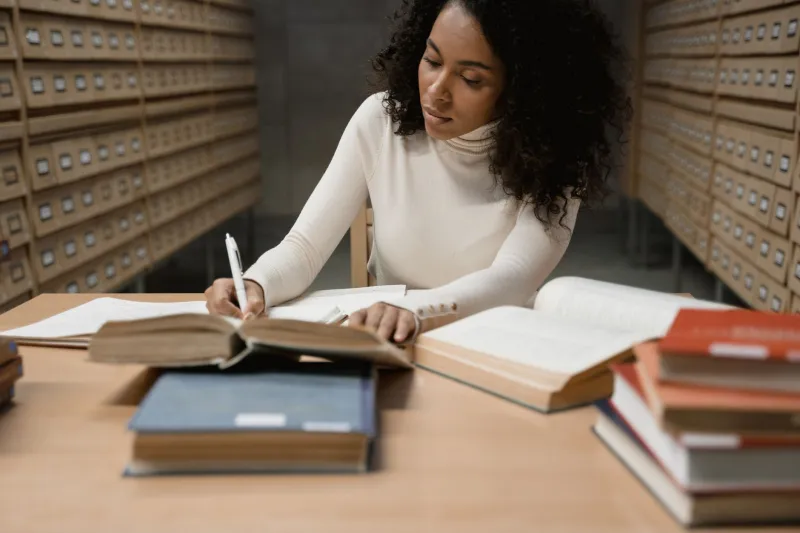
Margaret Eloise Farrow spent the better part of the 1980s writing a novel she called The Cartographer's Daughter — a quiet, literary story about a woman mapping the American interior in the 1840s. It was, by her own description, a deeply personal project. She revised it obsessively. She sent it to agents. She collected rejection letters with the resigned patience of someone who had decided that the work mattered more than the outcome.
By 1991, she had stopped submitting it. Not because she'd given up on it, exactly, but because she'd started a new project and the old one felt finished in a way that didn't require an audience. She printed a clean copy at a local shop, put it in a manila envelope, and set it on a shelf in her home office in Columbus, Ohio.
That should have been the end of it.
The Wrong Box
The printing company Farrow used was a small operation that handled everything from wedding programs to community newsletters to the occasional self-published book. In the early 1990s, they were also helping a local historical society produce a limited run of a nonfiction title about Ohio canal systems.
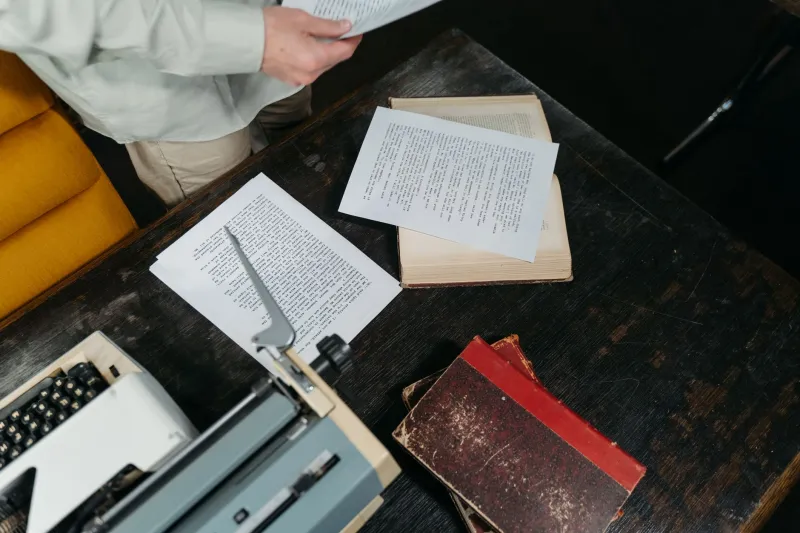
Somewhere in the chaos of a busy week, a staff member — the specific person was never conclusively identified — mislabeled a box of Farrow's manuscript pages. Instead of being filed for pickup, they were routed into the production queue for the historical society's order.
The historical society received their canal books. They also received, tucked into the same shipment, roughly forty bound copies of The Cartographer's Daughter.
The historical society's administrator, apparently assuming this was some kind of companion volume or bonus material, distributed the copies to members.
And some of those members read it.
A Ghost Book Finds Its Readers
What happened next unfolded over years and across a surprisingly wide network. Historical society members lent copies to friends. A few copies ended up in used bookstores. A librarian in Dayton acquired one and added it to a local history collection. Someone wrote a brief, enthusiastic review in a regional literary newsletter in 1994, describing The Cartographer's Daughter as "an underseen gem" and lamenting that the author was difficult to track down.
That was partly because the cover had no author name. The printing error had reproduced Farrow's manuscript more or less as she'd formatted it — a title page with the book's name and nothing else.
For years, the book existed in a kind of phantom state: genuinely loved by the people who'd stumbled across it, completely untraceable to its source.
Farrow, meanwhile, knew none of this. She had moved twice, started and finished two other writing projects, and largely stopped thinking about The Cartographer's Daughter.
The Phone Call
In 2002, a graduate student at Ohio State named Teresa Wainwright was researching representations of women in 19th-century American historical fiction. Someone in her department mentioned the mystery novel — the one with no author, the one that kept showing up in used stores and library collections around central Ohio.
Wainwright tracked down four copies. She loved the book. She also became mildly obsessed with finding out who wrote it.
The trail eventually led back to the print shop — which had, improbably, kept paper records from the early 1990s — and from there to a billing address for one Margaret Eloise Farrow.
Farrow was living in Cincinnati by then. She received a letter from Wainwright explaining the situation. She later described reading it as "the most disorienting experience of my adult life."
"I thought someone was playing a joke on me," she told an interviewer in 2004. "Then I thought I was having a medical episode."
The Part Nobody Agrees On
What followed the discovery is where accounts diverge depending on who's telling the story.
Farrow was, by multiple reports, genuinely moved to learn that strangers had read her work and responded to it. She was also, by her own admission, upset — not at the readers, not even really at the print shop, but at the strange helplessness of having her most private creative work circulate for a decade without her consent or knowledge.
She eventually authorized a small legitimate press to publish The Cartographer's Daughter properly in 2005, with her name on the cover, a brief author's note explaining the book's odd history, and minor revisions she'd been wanting to make since 1991.
It sold modestly. Some of the original ghost-copy readers bought it again just to have the real version.
Wainwright's graduate paper, which traced the book's accidental publication history, became something of a minor curiosity in literary circles — cited occasionally in discussions about authorship, distribution, and what it actually means for a book to exist in the world.
The answer, apparently, is that a book can exist quite thoroughly without the author's permission. Reality, as usual, didn't ask first.