When a Caribbean Joke Became a Sovereign Nation That Nobody Could Stop
When a Caribbean Joke Became a Sovereign Nation That Nobody Could Stop
On April 23, 1982, the mayor of Key West stood on a beach, swung a sword at a stale loaf of Cuban bread, and declared war on the United States. What followed wasn't violence or federal intervention—it was the birth of the Conch Republic, a micronation that would outlast the joke that created it by decades.
The story sounds absurd. But understand the context, and it becomes something far stranger: a genuine act of civic desperation that somehow transmuted into one of America's most enduring and beloved cultural pranks—one the government never quite figured out how to kill.
The Blockade That Started Everything
By 1982, the Florida Keys were suffocating. The U.S. Border Patrol had established a permanent blockade at the only bridge connecting the Keys to the mainland, searching every vehicle entering or leaving the island chain. Officially, they were looking for drugs and illegal immigrants. In practice, they were strangling the region's lifeblood: tourism.
The blockade was economically catastrophic. Visitors couldn't get through without hours-long delays. Residents couldn't leave without hassle. Local businesses were collapsing. Tax revenue evaporated. The federal government, in its infinite wisdom, had essentially quarantined the Keys—not because they were a security threat, but because someone in Washington decided this was an efficient use of law enforcement.
The Keys had tried everything. They'd negotiated with the Border Patrol. They'd appealed to state officials. They'd begged Congress. Nothing worked. The blockade remained, and the economic bleeding continued.
Something had to give. What nobody expected was that something to be a declaration of independence.
The Punchline That Refused to Die
Key West Mayor Dennis Porfirio and a group of local business owners decided to fight bureaucratic absurdity with absurdity of their own. If the federal government wouldn't listen to reason, maybe they'd listen to satire.
They announced they were seceding.
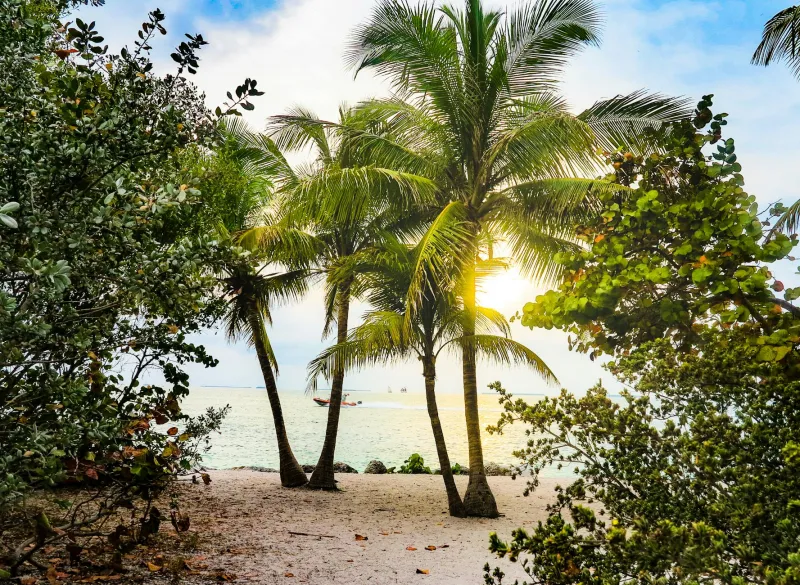
Not seriously, of course—or so everyone thought. On April 23, Porfirio appeared at Fort Zachary Taylor State Park, raised the newly designed Conch Republic flag, and ceremonially declared the Florida Keys an independent nation. He declared war on the United States by cutting the bread with a sword, then immediately surrendered and asked for foreign aid. It was political theater at its finest—a middle finger wrapped in a joke.
The media ate it up. National news outlets covered the story with bewilderment and amusement. The Conch Republic was born as a protest stunt, nothing more.
Except it didn't stop.
When the Joke Became Real
Here's where the story gets genuinely strange: the federal government had no idea what to do about it. The secession was obviously satirical. But it was also, technically, a declaration of independence by a community acting in unified political protest.
Instead of shutting it down, something unexpected happened. The Conch Republic became real through sheer force of repetition and public sentiment.
The Republic established a government structure—complete with a Prime Minister (the mayor, wearing an additional hat), a cabinet, and a written constitution. They designed currency. They issued passports, which tourists began collecting as novelty items. They established an anthem, a national bird (the rooster), and a motto: "We seceded where others failed."
Most remarkably, they kept it going. Every year on April 23, the Conch Republic celebrates its independence day. Residents dress up in costumes. There are mock military parades. The Prime Minister issues proclamations. It's become a genuine civic tradition—one that now attracts visitors and generates the economic activity the original blockade had destroyed.
The federal government never formally acknowledged the secession or the independence of the Conch Republic. They also never shut it down. It existed in a legal gray zone—too ridiculous to take seriously, too established to ignore. The blockade eventually ended, but the Republic never dissolved. It simply became what it was always meant to be: a permanent, celebrated, utterly legitimate joke.
The Strangest Victory
What makes this story truly bizarre is that it worked. The Keys' economic crisis was resolved not through negotiation or legal action, but through sustained, organized mockery. The federal government lifted the blockade. Tourism returned. The Conch Republic remained—not as a real threat to American sovereignty, but as a beloved institution that nobody had the heart to dismantle.
Today, the Conch Republic issues passports to thousands of visitors each year. You can buy Conch Republic currency at tourist shops. The independence celebration draws crowds. It's a functioning micronation in the middle of the United States, existing with the tacit approval of every government body involved.
It all started because a group of exasperated Americans decided that if the federal government wouldn't listen to serious arguments, they'd try something ridiculous instead. And somehow, improbably, the absurd solution proved more effective than any legitimate appeal ever could have been.
The Conch Republic stands as proof that sometimes, when you can't beat the system, you can satirize it so thoroughly that it becomes part of the system itself.