America's Forgotten Dream: The Year Congress Almost Imported Hippos to Louisiana
America's Forgotten Dream: The Year Congress Almost Imported Hippos to Louisiana
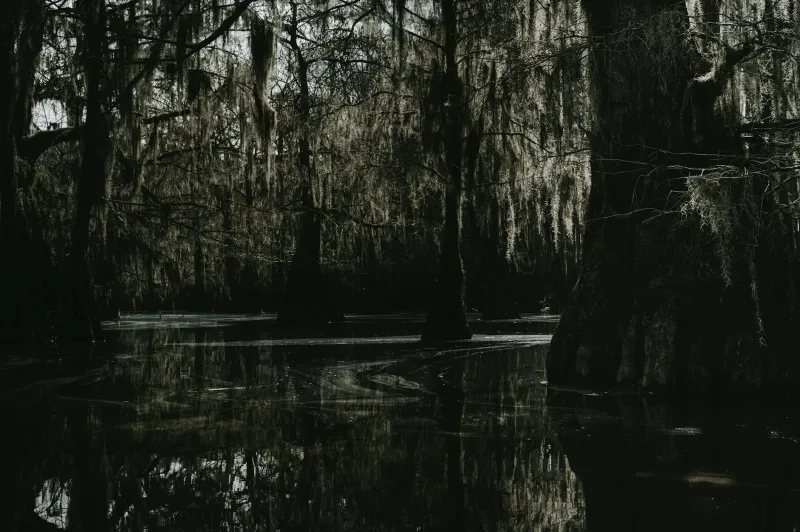
Imagine driving through the Louisiana bayou today and spotting a hippopotamus wallowing in the swamp. Imagine hippo ranches alongside cattle ranches. Imagine hippo meat becoming a standard protein in American supermarkets, the way beef or chicken is now.
This wasn't a fever dream. It was a serious legislative proposal that came shockingly close to becoming federal policy.
In the early 1900s, the United States Congress engaged in a genuine, earnest debate about importing African hippopotamuses into the Louisiana swamps as a solution to two distinct national problems: a looming meat shortage and an ecological crisis clogging the waterways. The bill had real support from influential lawmakers, was championed by a respected explorer and former Confederate soldier, and nearly made it through the legislative process.
It failed not because it was absurd—by the standards of the time, it was actually somewhat reasonable—but because of bureaucratic inertia and the sudden emergence of a competing solution. Today, it stands as one of history's most bizarre near-misses, a fork in the road where America almost became a nation of hippo ranchers.
The Problem: Too Many Swamps, Not Enough Meat
In the first decade of the 20th century, America faced a genuine crisis. The nation's population was booming. Demand for meat was exploding. But domestic cattle ranching had limits. Land was expensive. Feed was scarce in certain regions. And the growing middle class wanted protein.
At the same time, Louisiana's bayous were being strangled by an invasive aquatic plant: the water hyacinth. Originally imported from South America, the hyacinth had found the warm, wet Louisiana environment ideal for proliferation. By the early 1900s, it was clogging waterways, blocking navigation, destroying fishing grounds, and creating ecological havoc.
Traditional solutions weren't working. You couldn't chemically kill the hyacinth without poisoning the water. You couldn't physically remove it without massive, ongoing effort. The plant just kept coming back.
Someone needed a solution. Someone smart. Someone with vision.
Enter Frederick Russell Burnham.
The Champion: A Civil War Veteran Turned Visionary
Frederick Russell Burnham was not a typical American politician or businessman. He was a scout, an adventurer, and a genuine explorer who had spent years in Africa studying wildlife and ecosystems. He was also a former Confederate soldier with a reputation for strategic thinking and unconventional solutions.
Burnham had an idea that, while unconventional, wasn't entirely crazy by the standards of the time: what if you imported African hippopotamuses into Louisiana? The animals were herbivores. They ate aquatic plants. They could survive in warm, wet climates. And they were enormous—a single hippo could weigh up to 4,000 pounds.
Imagine hippos turned loose in the bayous, eating water hyacinths and converting them into meat. You'd solve the ecological crisis while simultaneously addressing the meat shortage. It was elegant. It was practical. It was visionary.
Or so it seemed.
The Proposal: A Bill That Nearly Became Law
Burnham didn't just propose the idea in conversation. He took it to Congress.
In 1910, legislation was introduced that would authorize the importation of African hippopotamuses into Louisiana. The bill had genuine support. Lawmakers who understood the ecological and economic problems facing Louisiana saw merit in the proposal. Here was a solution that addressed two crises simultaneously, proposed by a respected explorer and strategist.
The bill advanced through committee. It gained co-sponsors. It attracted serious consideration from members of Congress who understood agriculture, ecology, and the meat industry.
This wasn't a joke. This wasn't a prank or a publicity stunt. This was a genuine legislative effort to fundamentally alter the American landscape—and the American diet.
How close did it come to passing? Historians disagree on the exact moment of failure, but the bill certainly made it far enough into the legislative process to require serious deliberation. It wasn't killed by outright mockery or universal dismissal. It died through a combination of bureaucratic caution, concern about unintended consequences, and the emergence of a competing solution.
Why It Made Sense (At the Time)
The hippo proposal sounds absurd to modern ears. But contextualize it within early 20th-century thinking, and it becomes something more understandable.
America in 1910 was a nation of pragmatists experimenting with unconventional solutions to novel problems. This was the era of massive public works projects, aggressive environmental management, and faith in human ingenuity to solve ecological crises.
The idea of importing exotic animals to solve ecological problems wasn't unprecedented. Humans had been moving species around for centuries. The assumption was that with proper management, you could control the outcomes.
Moreover, the water hyacinth problem was genuinely severe. Louisiana was losing billions of dollars in potential economic value due to clogged waterways. If hippos could eat the hyacinth and provide meat in the process, the math seemed to work.
The bill's supporters weren't fools or dreamers. They were practical men trying to solve a practical problem with a resource that seemed suited to the task.
The Unspoken Danger
What the bill's supporters didn't fully appreciate—what nobody could have fully appreciated in 1910—was the danger of introducing a large, aggressive, highly territorial apex predator into an unfamiliar ecosystem.
Hippopotamuses are among the most dangerous animals on Earth. They kill more humans in Africa than any other large animal. They're territorial, aggressive, and almost impossible to control once established. They reproduce reliably in warm climates. And once established in an ecosystem, they're nearly impossible to remove.
If the hippo proposal had passed, Louisiana might have ended up with a thriving hippo population that nobody could eliminate. The animals would have outcompeted native species. They would have been a constant danger to humans. They would have spread beyond Louisiana into other southern states.
America might have become the only nation on Earth with a wild hippo problem—and it would have been entirely self-inflicted.
Why It Failed
The hippo bill ultimately died not because someone realized the danger, but because a competing solution emerged: refrigerated rail transport.
By the mid-1910s, railroad technology had advanced to the point where refrigerated cars could transport meat from the Great Plains to the East Coast without spoilage. Suddenly, the meat shortage wasn't a crisis anymore. Cattle from Texas and the Midwest could be shipped anywhere in the country.
The ecological problem in Louisiana remained, but without the accompanying meat shortage, the hippo solution lost its elegance. You couldn't justify importing a dangerous exotic animal just to control an invasive plant when you could use mechanical and chemical methods instead.
The bill died quietly. Burnham moved on to other projects. The hippo ranches of Louisiana never materialized.
What Might Have Been
It's almost impossible to overstate how different American history might have been if the hippo bill had passed. By now, 110+ years later, the Louisiana bayou would be home to a thriving, self-sustaining hippo population. The animals would have spread. They would have become part of the American ecosystem and the American diet.
Instead, that fork in the road never happened. America remained a nation of cattle ranchers. The water hyacinth problem was eventually managed through other means. And the hippo proposal faded into obscurity—a bizarre near-miss in the annals of American legislative history.
Today, it stands as a reminder that history is full of moments where one decision, one technological advancement, or one stroke of bureaucratic luck changed everything. And sometimes, the strangest proposals are the ones that almost became reality.