The Soybean Field That Hid a 15,000-Year-Old Legal Nightmare
The Discovery That Started a Legal Ice Age
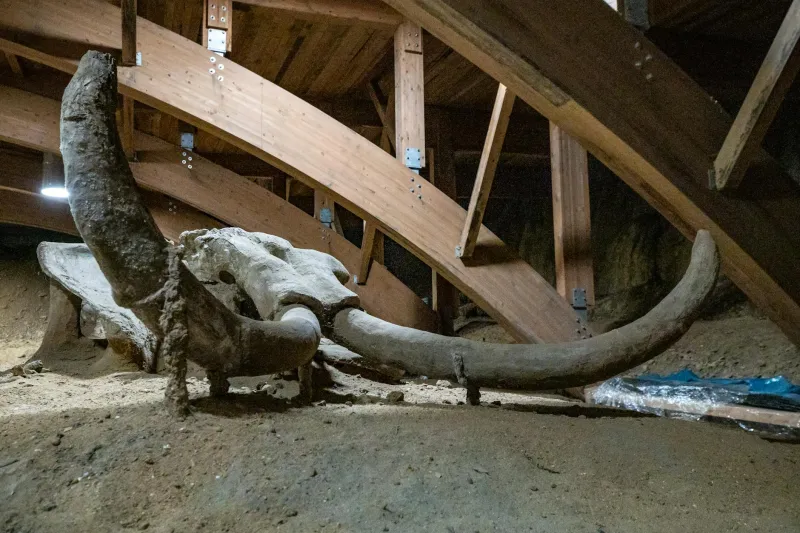
James Bristle was just trying to install a drainage tile in his soybean field when his excavator hit something that definitely wasn't supposed to be there. What emerged from the Michigan soil wasn't a rock or old farm equipment—it was a massive, curved bone that would soon turn his quiet farming operation into ground zero for one of America's most absurd property disputes.
The bone belonged to a woolly mammoth that had died roughly 15,000 years ago, long before humans had invented concepts like property law, fossil rights, or university research protocols. Unfortunately for Bristle, those modern complications were about to make his ancient discovery feel very contemporary.
When Paleontology Meets Property Law
Bristle's first call was to the University of Michigan, figuring that scientists would want to know about his find. What he didn't anticipate was unleashing a bureaucratic avalanche that would make his mammoth bones the center of a legal tug-of-war involving multiple universities, state agencies, federal authorities, and commercial fossil dealers.
The core problem was deceptively simple: who owns a 15,000-year-old animal that died on land that's been private property for less than 200 years?
In most states, the answer is surprisingly unclear. Unlike mineral rights or water rights, fossil rights exist in a legal gray area that varies wildly depending on location, land ownership history, and the specific type of fossil discovered. Michigan law, like many states, had never bothered to clarify whether ancient animal remains constitute "treasure trove," "archaeological artifacts," or simple "personal property."
The Scientific Scramble
University of Michigan paleontologist Daniel Fisher arrived at Bristle's farm expecting a routine fossil recovery. Instead, he found himself navigating a complex web of competing interests that would have challenged a team of lawyers.
The university wanted the bones for research and public education. The state argued that significant paleontological finds belonged in public institutions. Federal authorities questioned whether interstate transport of the fossils required special permits. Meanwhile, commercial fossil dealers began circling like vultures, offering Bristle substantial sums for mammoth bones that could sell for thousands of dollars per piece.
Fisher later described the situation as "trying to conduct scientific research while everyone argues about who owns the test subjects." The mammoth bones—nearly 20% of a complete skeleton—represented a significant scientific discovery. But the legal uncertainty meant that proper excavation and study could be delayed indefinitely while lawyers sorted out ownership.
The Commercial Fossil Market Complication
What made Bristle's situation particularly complex was the booming commercial market for mammoth fossils. Wealthy collectors pay premium prices for well-preserved specimens, with complete mammoth skulls selling for $50,000 or more. Suddenly, Bristle's soybean field contained what amounted to prehistoric treasure.
This commercial interest created an ethical dilemma that highlighted fundamental problems with American fossil law. Should scientifically important discoveries be available for private sale, potentially removing them from research access forever? Or do property rights trump scientific value?
The University of Michigan found itself in the awkward position of competing with commercial dealers for access to fossils located on private land. Unlike federal land, where fossil collection is heavily regulated, private property fossil discoveries operate under a patchwork of state laws that often favor landowner rights over scientific interest.
The Insurance Problem Nobody Saw Coming
As if the ownership question wasn't complicated enough, Bristle discovered that his farm insurance policy didn't cover "paleontological discoveries." The bones were potentially valuable, but they were also potentially worthless if legal challenges prevented their sale. Insurance companies had no framework for evaluating the risk of insuring prehistoric animals.
This created a surreal situation where Bristle needed to protect fossils that might be worth a fortune or might be legally worthless, depending on court decisions that could take years to resolve. Meanwhile, the bones were deteriorating in storage, losing both scientific and commercial value.
The insurance industry's response was typically bureaucratic: they created a new category of coverage for "unexpected paleontological discoveries on agricultural property." Bristle became the unwitting test case for insurance policies covering woolly mammoth finds.
Federal vs. State vs. Local Authority
The legal confusion deepened when multiple government agencies began asserting jurisdiction over the mammoth bones. The Michigan Department of Natural Resources claimed authority over "significant paleontological resources." Federal authorities suggested that interstate transport of the fossils might require permits under laws designed to prevent trafficking in archaeological artifacts.
Local authorities, meanwhile, wondered whether the discovery required environmental impact studies or special zoning considerations. The township had never dealt with paleontological sites and wasn't sure whether mammoth bones constituted a "commercial operation" that might violate agricultural zoning restrictions.
The result was a bureaucratic standoff where everyone claimed authority but nobody wanted responsibility. Bristle found himself fielding calls from agencies he'd never heard of, each explaining why they needed to be involved in decisions about bones that had been sitting peacefully in his field for 15 millennia.
The Academic Politics Angle
Behind the scenes, the mammoth discovery triggered academic politics that rivaled any soap opera. Multiple universities expressed interest in studying the bones, each arguing that their research programs were best equipped to maximize scientific value.
The University of Michigan claimed priority based on geographic proximity and existing relationships with local landowners. Michigan State University argued that their paleontology program had more experience with Ice Age fauna. Out-of-state institutions suggested that local bias might compromise objective research.
These academic disputes created additional legal complications. If the bones were donated to one university, would competing institutions have legal grounds to challenge the decision? Could multiple institutions claim joint custody of individual bones? The mammoth skeleton became a proxy war for broader conflicts about research access and academic prestige.
The Resolution That Satisfied Nobody
After months of legal wrangling, the various parties reached a compromise that demonstrated the absurdity of applying modern law to prehistoric discoveries. Bristle retained ownership of the bones but agreed to loan them to the University of Michigan for research purposes. Commercial fossil dealers were allowed to purchase molding rights, creating replicas for private sale.
The state received assurances that the most scientifically significant bones would remain available for research. Federal authorities agreed that the bones didn't require special transport permits as long as they stayed within Michigan. Insurance companies created new policy categories for "agricultural paleontological discoveries."
It was a solution that satisfied nobody completely but allowed everyone to claim partial victory. More importantly, it established precedents that would govern similar discoveries throughout the Midwest.
The Bigger Picture: Fossils and Property Rights
Bristle's mammoth bones highlighted fundamental problems with American fossil law that extend far beyond Michigan soybeans. The United States lacks consistent federal legislation governing fossil discoveries on private land, creating a patchwork of state laws that often contradict each other.
This legal uncertainty affects everything from scientific research to commercial fossil markets. Important discoveries can disappear into private collections, while legitimate fossil dealers struggle with unclear regulations. Scientists face ethical dilemmas about working with commercially obtained specimens, while landowners discover that finding fossils can create more problems than profits.
The Lessons from a Legal Ice Age
The mammoth in Bristle's soybean field ultimately taught everyone involved that ancient discoveries create surprisingly modern complications. A creature that died before humans invented writing triggered debates about property rights, scientific ethics, commercial law, and federal jurisdiction.
Today, the mammoth bones are displayed at the University of Michigan Museum of Natural History, where visitors can admire both the fossil specimens and the explanatory placard describing the legal battle that brought them there. It's probably the only museum display that includes footnotes about insurance policies and interstate commerce law.
Bristle returned to farming, though he admits to being more cautious about excavation projects. The experience taught him that sometimes the most valuable things buried in your backyard are the ones that come with the most complicated paperwork.
The real lesson from Michigan's mammoth legal battle is that reality often creates stranger complications than fiction ever could. When 15,000-year-old bones meet 21st-century law, the result is a bureaucratic ice age that makes woolly mammoth extinction seem straightforward by comparison.