When the Postal Service Played a 53-Year Game of Hide and Seek With One Letter
The Letter That Time Forgot
Imagine opening your mailbox in 2011 and finding a letter addressed to your mother—who died in 1999—postmarked from 1958, with a three-cent stamp that predates the moon landing. That's exactly what happened to Janet Barrett when she discovered a piece of mail that had been playing the world's longest game of postal hide-and-seek.
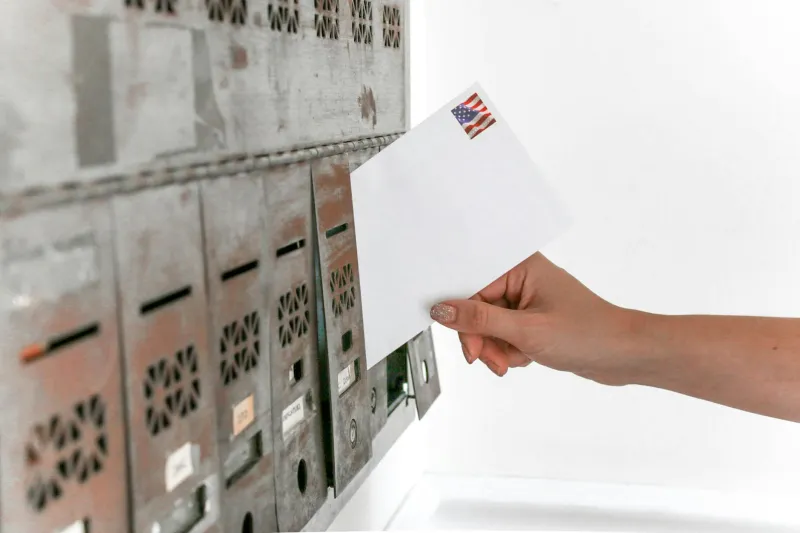
The envelope looked impossibly pristine for something that had supposedly been bouncing around the postal system since the Eisenhower administration. No water damage, no yellowing, no signs of the five decades it had spent in bureaucratic limbo. Just a crisp white envelope with her mother's maiden name written in careful cursive, bearing a stamp that cost less than a modern penny.
A Journey Through Postal Purgatory
The letter had originated in 1958 from a family friend in Illinois, intended for Barrett's mother at their address in Pennsylvania. Somewhere between the mailbox and its destination, it vanished into what postal workers call "the system"—that mysterious bureaucratic void where lost mail goes to live in suspended animation.
For 53 years, this single piece of correspondence existed in a state of postal purgatory. While the world around it transformed—presidents came and went, technology revolutionized communication, and the very concept of handwritten letters became quaint—this envelope waited patiently for its moment to complete its mission.
The U.S. Postal Service has never fully explained where the letter spent those missing decades. Their official response was characteristically bureaucratic: "Mail can occasionally be delayed due to various operational factors." Various operational factors. For 53 years.
The Contents of a Time Capsule
When Barrett finally opened the letter, she found herself reading a snapshot of 1958 America frozen in time. The family friend wrote about everyday concerns that seemed simultaneously familiar and alien—worries about the economy, updates on mutual acquaintances, casual mentions of prices and events that belonged to a different era entirely.
The letter contained no earth-shattering revelations or profound insights, which somehow made its arrival even more surreal. This wasn't a dramatic message from the past; it was mundane correspondence that had accidentally become a time traveler. The ordinariness of its contents highlighted the extraordinary nature of its journey.
Barrett later described the experience as "like receiving mail from a ghost." The letter writer had passed away years earlier, her mother was gone, and even the handwriting belonged to a world that no longer existed. She was essentially the sole surviving witness to a conversation that began before she was born.
The Postal Service's Secret Collection
Barrett's letter isn't unique—it's part of a phenomenon that postal workers quietly acknowledge but rarely discuss. The USPS admits to thousands of similar cases where mail surfaces decades after its intended delivery date. They maintain facilities specifically designed to handle what they euphemistically call "delayed mail processing."
Some letters emerge from behind sorting machines where they've been trapped for years. Others surface during building renovations, discovered in forgotten corners or hidden compartments. A few reappear when postal facilities are demolished, revealing caches of mail that had been presumed lost forever.
The most common explanation involves mail falling through cracks—literally. Postal facilities are massive operations with countless opportunities for letters to slip between conveyor belts, hide behind equipment, or get wedged in machinery. Once trapped, they can remain hidden until routine maintenance or facility updates bring them back to light.
When Time Stands Still
What makes these delayed deliveries so unsettling isn't just their improbability—it's how they reveal the strange persistence of physical objects in our digital age. In a world where communication happens instantaneously, the idea of a letter taking five decades to travel a few hundred miles feels like a glitch in reality itself.
The 1958 letter arrived in a world where email had replaced handwritten correspondence, where the three-cent stamp on its envelope could barely buy a piece of penny candy, and where the very act of waiting for mail had become nostalgic rather than necessary. It was a relic from an analog era delivered to a digital recipient.
The Bureaucracy of Forever
Perhaps most remarkably, the postal system continued to honor a 53-year-old delivery commitment without question. No additional postage was required, no explanations were demanded. The letter simply appeared in Barrett's mailbox as if time had folded in on itself, bringing 1958 and 2011 together for one impossible moment.
This quiet efficiency in the face of temporal impossibility reveals something profound about institutional memory. The postal service had somehow maintained its obligation to deliver this letter across five decades, multiple facility relocations, countless personnel changes, and technological revolutions that transformed every aspect of mail processing.
Messages From the Bureaucratic Beyond
Barrett's letter represents more than just a postal oddity—it's evidence of how bureaucratic systems can inadvertently become time machines. Somewhere in the vast machinery of government operations, pieces of the past continue to circulate, waiting for their moment to resurface and remind us that some commitments transcend the limitations of time itself.
The next time you drop a letter in the mailbox, remember: you're not just sending mail, you're potentially creating a message in a bottle that might wash up on someone's doorstep decades from now, carrying news from a world that no longer exists to recipients who never expected to hear from the dead.