The Unluckiest Lucky Man in History: Surviving Two Nuclear Bombs in Three Days
The Business Trip from Hell
Imagine telling someone you survived not one, but both atomic bomb attacks that ended World War II. They'd probably recommend you see a therapist. Yet Tsutomu Yamaguchi lived this impossible reality, earning him the dubious distinction of being history's most unlucky lucky man.
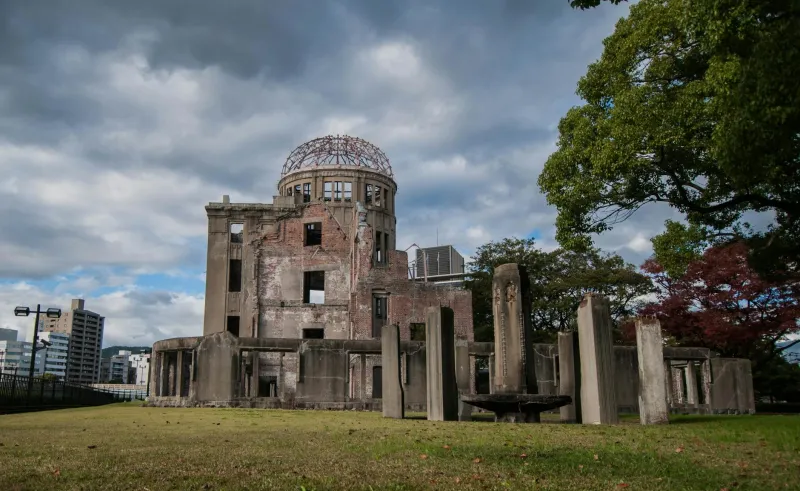
On August 6, 1945, Yamaguchi was wrapping up a three-month business assignment in Hiroshima for Mitsubishi Heavy Industries. As a naval engineer, he'd been working on tanker designs—routine corporate work that should have been forgettable. Instead, it placed him 1.8 miles from ground zero when the Enola Gay dropped "Little Boy" at 8:15 AM.
When Lightning Strikes Once
Yamaguchi was walking to a shipyard when a blinding flash lit up the morning sky. The blast threw him into a potato patch, temporarily blinding him and leaving severe burns on his left side. As he stumbled through the apocalyptic landscape—buildings flattened, people wandering like ghosts with their skin hanging in strips—he somehow found his two colleagues. Together, they spent the night in an air-raid shelter before catching one of the few trains still running.
Destination: Nagasaki. Home.
The mathematical odds of surviving the Hiroshima blast were already astronomical. Most people within two miles of ground zero died instantly or within hours. But Yamaguchi's ordeal was just beginning.
The Impossible Encore
On August 9, despite his injuries, Yamaguchi reported to his office at Mitsubishi's Nagasaki shipyard. He was telling his supervisor about the "new type of bomb" that had devastated Hiroshima when another familiar flash filled the room. This time, he was two miles from the hypocenter when "Fat Man" detonated over Nagasaki.
Once again, the blast knocked him unconscious. Once again, he survived what killed tens of thousands. His bandages caught fire, reopening his wounds, but he lived to see the second mushroom cloud rise over Japan.
The Bureaucratic Nightmare
You'd think surviving both atomic bombs would be front-page news, but Yamaguchi's story disappeared into post-war chaos. For decades, he was officially recognized only as a Nagasaki survivor. The Japanese government's rigid bureaucracy couldn't process the idea that someone had experienced both attacks.
Yamaguchi spent years fighting for recognition, armed with witness statements and medical records. Officials seemed genuinely baffled by his claims—not because they doubted him, but because the scenario was so statistically impossible that their forms didn't account for it.
The Numbers Don't Lie (But They're Unbelievable)
The probability of surviving either atomic blast was roughly 1 in 3 for people in the immediate area. The chance of being present at both bombings? Astronomically small. Factor in the three-day window between attacks, the specific locations, and the transportation logistics of war-torn Japan, and you're looking at odds that make winning the lottery seem routine.
Yet Yamaguchi wasn't alone. Researchers estimate that 165 people experienced both bombings, though most weren't as close to ground zero. Still, Yamaguchi remains the only person officially recognized by Japan as a survivor of both attacks—a designation that didn't come until 2009, when he was 93 years old.
The Quiet Aftermath
Yamaguchi lived to 93, dying of stomach cancer in 2010. He spent his later years as a reluctant spokesman for nuclear disarmament, often saying he wished his story wasn't true. His wife also survived the Nagasaki bombing, and remarkably, their children were born healthy despite their parents' radiation exposure.
In interviews, Yamaguchi often seemed bemused by his own survival. "I can't understand why nothing happened to me," he once said. Scientists still can't fully explain how he lived through radiation levels that killed others instantly.
When Reality Outpaces Fiction
Yamaguchi's story challenges our understanding of survival, coincidence, and the randomness of history. It's the kind of tale that screenwriters would reject as too unbelievable, yet it's meticulously documented in Japanese government records and witness testimonies.
His experience also raises uncomfortable questions about luck, fate, and the arbitrary nature of survival during humanity's darkest moments. In a war that claimed millions of lives, one man somehow threaded the needle between two of history's most destructive weapons.
Tsutomu Yamaguchi didn't ask to be history's most unlikely survivor. He just wanted to finish his business trip and go home. Instead, he became living proof that sometimes reality is stranger—and more improbable—than anything we could imagine.