The Teenager Who Ruined Chemistry Class and Accidentally Launched the Fashion Industry
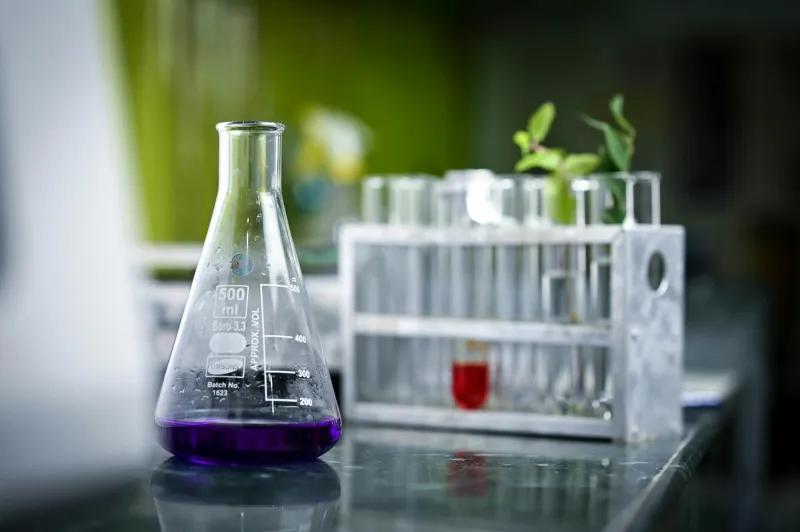
When Homework Goes Spectacularly Wrong
Picture this: You're eighteen years old, hunched over test tubes in your makeshift home laboratory, desperately trying to complete an assignment that could cure one of humanity's deadliest diseases. You've been mixing chemicals for weeks, following your professor's theoretical framework, and all you have to show for it is a sticky, purple mess that looks like something a toddler might finger-paint with.
Most students would dump the failed experiment down the drain and start over. William Henry Perkin decided to see what would happen if he mixed his purple disaster with alcohol.
That decision in 1856 accidentally created the world's first synthetic dye, launched a global fashion revolution, and made a teenager richer than most adults could dream of becoming. It also fundamentally changed how we make everything from medicines to explosives—all because a college student in London couldn't figure out how to synthesize quinine.
The Assignment That Changed Everything
Perkin wasn't just any chemistry student. At eighteen, he was already working as an assistant to August Wilhelm von Hofmann at the Royal College of Chemistry, one of the most prestigious scientific institutions in Victorian England. Hofmann had given his students what seemed like a straightforward challenge: create synthetic quinine, the only known treatment for malaria.
This wasn't just an academic exercise. Malaria was decimating British troops and colonial administrators across the empire. Natural quinine came exclusively from cinchona bark harvested in South America, making it expensive and difficult to obtain. A synthetic version would be worth a fortune and save countless lives.
The theoretical approach seemed sound. Quinine's molecular formula was known, and Hofmann believed it could be synthesized from coal tar derivatives—the black, sticky byproducts of gas production that were considered industrial waste. Perkin spent his Easter vacation in 1856 working methodically through different combinations in his home laboratory.
Every experiment failed. Instead of the clear, bitter compound that could cure malaria, Perkin kept producing various shades of brown and black sludge.
The Purple Accident That Launched a Thousand Ships
Frustrated but persistent, Perkin tried one final combination: aniline sulfate treated with potassium dichromate. The result was another failure—a dark, unpromising mess that any reasonable person would have discarded immediately.
But Perkin noticed something odd when he tried to clean his equipment. The purple residue dissolved beautifully in alcohol, creating a brilliant, vibrant solution unlike any color he'd ever seen. More importantly, when he dipped a piece of silk into the solution, the fabric absorbed the color completely and wouldn't let it go, even when washed.
He had accidentally created the first synthetic aniline dye.
From Chemistry Dropout to Fashion Mogul
What happened next reads like a Victorian-era startup success story. Perkin immediately recognized the commercial potential of his accidental discovery. Natural purple dyes were notoriously difficult and expensive to produce—true purple came from thousands of murex shells or from rare lichens that took months to process. His synthetic version could be manufactured quickly and cheaply from coal tar, an abundant waste product.
Despite his professor's horror at abandoning pure science for commerce, Perkin dropped out of college and convinced his father and brother to invest their life savings in a dye factory. They built their facility in northwest London, and within months, "Perkin's Purple" or "mauveine" was being shipped across Europe.
The timing couldn't have been better. The 1850s marked the beginning of mass-produced clothing, and textile manufacturers were desperate for reliable, colorfast dyes. Perkin's purple became the must-have color of the era when Queen Victoria herself wore a mauveine dress to the Royal Exhibition of 1862, sparking a fashion craze that lasted for decades.
The Ripple Effect Nobody Saw Coming
Perkin's accidental discovery did far more than change fashion trends. His success proved that synthetic chemistry could be incredibly profitable, launching what would become the modern pharmaceutical and chemical industries. Within twenty years, German companies like BASF and Bayer were synthesizing not just dyes but medicines, explosives, and industrial chemicals using variations of Perkin's methods.
The teenager who couldn't make quinine had inadvertently shown the world how to make aspirin, dynamite, and eventually antibiotics. His purple mistake became the foundation for everything from modern medicine to the explosives that would reshape warfare in the twentieth century.
By age thirty-six, Perkin had made enough money to retire comfortably and return to pure research. He spent his later years working on the theoretical problems that had always fascinated him, secure in the knowledge that his homework failure had changed the world.
The Beautiful Irony of Scientific Progress
Perkin's story perfectly captures the beautiful unpredictability of scientific discovery. He set out to cure malaria and ended up revolutionizing fashion. He failed at his assignment and accidentally launched the modern chemical industry. He was trying to save lives in tropical colonies and instead transformed how people dressed in London drawing rooms.
Most remarkably, his "failure" to synthesize quinine eventually led to better antimalarial drugs than the natural version he'd been trying to recreate. The synthetic chemistry techniques pioneered by companies building on Perkin's work would eventually produce more effective treatments for malaria than anything found in nature.
Sometimes the most important discoveries come not from brilliant planning but from brilliant people paying attention when their plans go completely wrong. William Perkin's purple mess reminds us that scientific progress often happens sideways—and that the next time a teenager's chemistry experiment produces an unexpected result, we might want to pay attention.