When Democracy Hung by a Telegraph Wire
The presidential election of 1876 was already a mess before the paperwork disasters began. Republican Rutherford B. Hayes faced off against Democrat Samuel J. Tilden in one of the most contentious races in American history, with disputed electoral votes from three Southern states throwing the outcome into chaos. What nobody expected was that clerical errors would nearly hand the presidency to the candidate who had actually lost.
The story of how America almost inaugurated the wrong president reads like a comedy of errors — except the punchline could have been a constitutional crisis.
The Perfect Storm of Incompetence
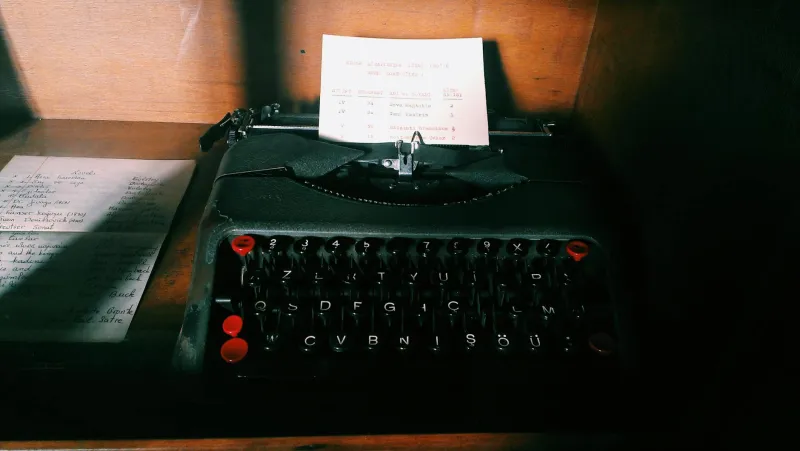
The trouble began in the cramped telegraph offices that served as the nervous system of 19th-century democracy. As election results poured in from across the country, overworked clerks struggled to process thousands of messages containing vote tallies, candidate names, and electoral counts. The system worked adequately when everything went smoothly, but the 1876 election was anything but smooth.
Disputed returns from South Carolina, Florida, and Louisiana meant that multiple versions of electoral vote counts were flying back and forth between state capitals and Washington. Telegraph operators, working in shifts around the clock, began making increasingly frequent mistakes as exhaustion set in. Names were misspelled, numbers were transposed, and crucial details were lost in transmission.
But the real disaster was still brewing in the offices of the Electoral Commission, the special body created by Congress to resolve the disputed election.
The Name That Changed Everything
On March 1, 1877 — just three days before the scheduled inauguration — a clerk named William Morrison was preparing the official certification documents when he noticed something that made his blood run cold. The name on the presidential certificate didn't match the name in his notes from the Electoral Commission's final vote.
Somewhere in the chain of transcription, telegraph transmission, and document preparation, "Hayes" had become "Tilden." The official paperwork was ready to certify Samuel Tilden as the 19th President of the United States, despite the fact that the Electoral Commission had awarded the election to Rutherford Hayes.
Morrison frantically began tracing the error backward through layers of bureaucracy, discovering a trail of mistakes that read like a manual on how not to run a democracy.
The Paper Chase
The investigation revealed a cascade of failures that would have been comical if the stakes hadn't been so high. A telegraph operator in Florida had misread handwriting and transmitted "Tilden" instead of "Hayes" in a crucial message about that state's electoral votes. A clerk in Washington had copied the wrong name from the garbled telegram into the official tally sheets.
When the Electoral Commission's final decision was transcribed for the certification documents, another clerk — working from the incorrect tally sheets — dutifully copied "Tilden" as the winner. Multiple people had reviewed the paperwork, but in the chaos surrounding the disputed election, everyone assumed someone else had verified the accuracy of the candidate's name.
The error had been compounded by the fact that Tilden had actually won the popular vote, making his name on the documents seem less obviously wrong to casual observers. In an election where everything was disputed, one more irregularity didn't immediately raise red flags.
The Midnight Scramble
Morrison's discovery triggered a frantic behind-the-scenes effort to prevent a constitutional disaster. Government lawyers worked through the night to prepare new certification documents, while officials quietly contacted key members of Congress to explain the situation. The goal was to fix the error without creating a public scandal that might undermine confidence in the already-controversial election results.
Meanwhile, Tilden's supporters — who had been preparing for a long legal battle over Hayes's victory — were completely unaware that their candidate had briefly been the official president-elect due to clerical incompetence rather than electoral success.
The corrected documents were completed just hours before Hayes was scheduled to take the oath of office, averting what would have been an unprecedented crisis. Imagine the scene: the wrong candidate showing up to be inaugurated, with legally valid paperwork supporting his claim to the presidency.
The Cover-Up That Worked
The government's response was swift and decisive: they buried the story completely. Official records were quietly corrected, the clerks involved were reassigned to other duties, and everyone who knew about the error was instructed to keep quiet about it. The incident didn't become public knowledge until decades later, when historians researching the disputed election stumbled across references to the "March 1st correction" in archived correspondence.
By then, the participants were either dead or too old to care about relitigating a 19th-century bureaucratic nightmare. The story became a footnote in election history rather than the constitutional crisis it could have been.
The Lessons Nobody Learned
The near-miss of 1877 highlighted just how fragile the machinery of American democracy really was in the pre-electronic age. The entire system depended on overworked clerks accurately copying information by hand, telegraph operators correctly transmitting messages, and multiple layers of bureaucrats catching each other's mistakes.
That this ramshackle system worked at all was remarkable. That it nearly produced the wrong president was perhaps inevitable.
The incident led to some modest improvements in record-keeping procedures, but the fundamental vulnerabilities remained. American elections would continue to depend on paper records, human judgment, and bureaucratic competence well into the 20th century.
Today, when we debate electronic voting systems and worry about cyber-security, it's worth remembering that democracy once nearly collapsed because a tired telegraph operator couldn't read someone's handwriting. Sometimes the most sophisticated systems are brought down by the most mundane failures — and sometimes we get lucky enough to catch the mistake before it's too late.