The Town That Accidentally Outlawed Its Own Existence
When Democracy Argues With Itself
Picture this: you're the mayor of a small town, going about your daily business of fixing potholes and arguing about snow removal budgets, when someone casually mentions that your entire municipality has been operating illegally for the past forty years. Not because of corruption or fraud, but because your predecessors accidentally passed laws that made the very act of being an incorporated town a violation of your own municipal code.
Welcome to Centerville, South Dakota, where bureaucratic mishaps reached truly artistic levels of absurdity.
The Paperwork That Broke Reality
The trouble began in 1923, when Centerville's town council decided to get serious about municipal organization. In a burst of legislative enthusiasm, they passed Ordinance 47, which established strict guidelines for what activities could legally occur within town limits. The ordinance was comprehensive, detailed, and—as they would discover decades later—accidentally included language that prohibited "any form of governmental assembly or municipal authority" from operating within the town boundaries.
But wait, it gets better.
Three months later, the same council passed Ordinance 52, which mandated that all municipal functions must be conducted within town limits to be considered legally valid. So now Centerville had simultaneously made municipal government both required and forbidden within its own borders.
For good measure, they followed up with Ordinance 58 in 1924, which declared that any law conflicting with previous ordinances would be "null and void," but failed to specify which ordinance would take precedence when they conflicted with each other.
The Long Sleep of Legal Logic
Here's the truly remarkable part: nobody noticed. For forty-three years, Centerville hummed along, electing mayors, passing budgets, and maintaining roads, all while technically violating its own fundamental laws. The town council met monthly in the same building where they had accidentally outlawed their own authority to meet.
Meetings were held, taxes were collected, and municipal services were provided by a government that had technically legislated itself out of existence. It was democracy's version of a philosophical thought experiment, except with real garbage collection.
The contradiction only came to light in 1966, when a new city attorney named Margaret Holbrook was reviewing the municipal code to settle a dispute about dog licensing fees. As she worked through the ordinances chronologically, she encountered what she later described as "the most beautiful legal disaster" she'd ever seen.
The Discovery That Broke Everything
Holbrook's memo to the mayor is a masterpiece of understated legal panic: "It appears we may have a small problem with our municipal authority. Specifically, we don't have any."
The revelation created an immediate crisis. If the town council had no legal authority to govern, then every decision they'd made for four decades was potentially invalid. Every tax collected, every permit issued, every ordinance passed—all of it existed in a legal gray area that would make constitutional scholars weep.
Worse still, the very act of meeting to discuss the problem would be a violation of Ordinance 47. The town council couldn't legally convene to solve the problem of why they couldn't legally convene.
The Great Legal Pretzel
What followed was a bureaucratic ballet of stunning complexity. Since the town council couldn't legally meet to repeal the problematic ordinances, they had to find a workaround that wouldn't further violate their own laws.
Their solution was brilliantly absurd: they held a series of "accidental encounters" at the local diner, where council members would "happen to run into each other" and "casually discuss" municipal matters. These weren't official meetings—those were illegal—but rather a series of coincidental conversations that just happened to result in unanimous agreement on various municipal issues.
After six months of coffee shop diplomacy, they had crafted a solution. They would simultaneously pass three new ordinances: one repealing Ordinance 47, one repealing Ordinance 52, and one establishing that the town had always had the legal authority to govern itself, retroactively validating four decades of technically illegal municipal activity.
But here was the final twist: they couldn't vote on these ordinances in an official meeting, because official meetings were still illegal. So they held what they called a "hypothetical referendum," where residents could express their "theoretical support" for the proposed changes.
The Miracle of Bureaucratic Resurrection
On March 15, 1967, the "hypothetical referendum" passed with 89% theoretical support. The town council then held what they termed a "provisional meeting pending legal resolution" to formally adopt the ordinances that would make their meeting legal.
It was a perfect circle of bureaucratic logic: they held an illegal meeting to pass laws that would make the meeting legal, thereby retroactively legitimizing the meeting that had passed the laws that made it legal.
Somehow, it worked.
The Aftermath of Accidental Anarchy
Centerville's legal resurrection made headlines across South Dakota, though mostly in the "weird news" sections. Legal scholars used it as an example of how municipal law can tie itself in knots when nobody's paying attention. The town became a minor pilgrimage site for students of governmental philosophy and lovers of bureaucratic absurdity.
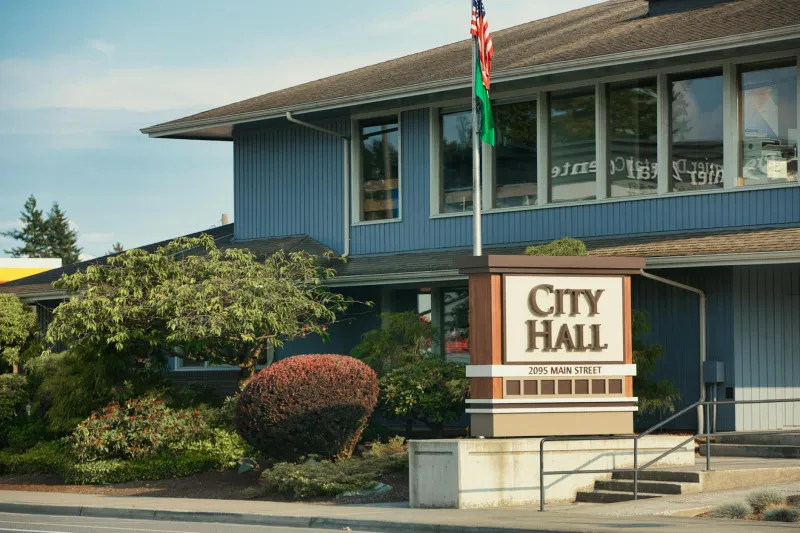
Today, Centerville operates normally, with all the standard municipal functions you'd expect. They've kept copies of the problematic ordinances in their city hall, along with Margaret Holbrook's original memo, as a reminder that democracy sometimes needs to be saved from itself.
The town council still meets monthly, in the same building where they once accidentally outlawed their own existence. And yes, they're very, very careful about reading their ordinances before passing them.