He Woke Up With a Stranger's Face. His Wife Woke Up With a Stranger's Husband.
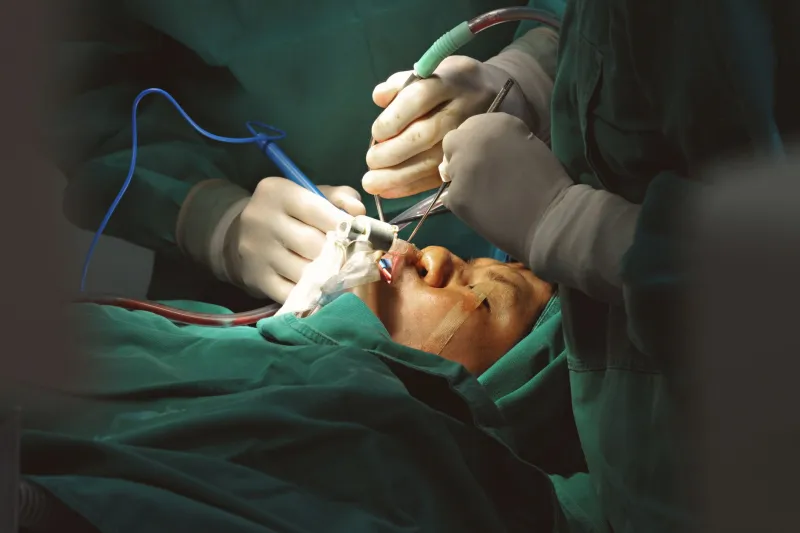
In the spring of 2011, surgeons at Brigham and Women's Hospital in Boston announced they had done something that, not long before, belonged entirely to science fiction. They had given a man a new face. Not a reconstructed one — a transplanted one, taken from a donor and grafted, nerve by nerve and vessel by vessel, onto a man who had been living without recognizable features for two years.
The patient's name was Dallas Wiens. He was 25. He had been horribly burned in 2008 when a scissor lift he was working on struck a high-voltage power line at a Fort Worth church where he was doing volunteer painting. The electricity traveled through his body and erased his face almost entirely — nose, lips, eyebrows, and most of the soft tissue beneath them, gone. He was left with what doctors gently described as a "featureless" appearance.
The transplant took 15 hours. It involved more than 30 surgeons, nurses, and support staff. It was the most complex facial transplant ever performed in the United States at the time, and it worked.
What nobody put in the press release was what came after.
The Part the Headlines Skipped
Recovery from a face transplant isn't like recovering from a broken arm. The body doesn't simply accept a new face — it has to be chemically persuaded, daily, not to reject it. Wiens would be on immunosuppressant drugs for the rest of his life, drugs that blunt the immune system and carry their own long-term risks. But the physical complications, as significant as they were, turned out to be almost secondary to the psychological ones.
Wiens had a young daughter. He had a wife. He came home from the hospital looking like someone else — not a monster, not a horror, but genuinely, measurably, a different person. The donor's bone structure. A different nose. A different mouth. The face of a man who had died and, in some strange redistributive way, lived on.
His wife filed for divorce within months of his return.
The reasons, as reported in subsequent interviews and profiles, weren't simple cruelty or shallow vanity. They were something harder to explain and, in a way, harder to argue with. She didn't know who she was looking at. The man she had married — the specific, physical, particular person she had built a life with — wasn't there anymore. Someone was. Just not him, exactly. The marriage didn't survive the ambiguity.
What Does 'Recovery' Actually Mean?
Medicine is very good at defining success. A successful transplant means the tissue integrates, the blood flows, the nerves slowly, painstakingly reconnect. By every clinical measure, Dallas Wiens's surgery was a triumph. The surgical team published their findings. The hospital issued statements. The story ran on the front pages.
But medicine has a harder time defining what comes after success — the long, strange middle ground where a person has to figure out who they are now.
Wiens spoke publicly about the experience with remarkable candor. He talked about looking in the mirror and seeing someone unfamiliar. He talked about the grief of his marriage ending alongside the gratitude for being alive and functional. He talked about learning to feel his new face, slowly, as sensation returned over months and years — a process that is, neurologically speaking, almost like learning to feel anything for the first time.
Face transplant recipients occupy a category of human experience that has no real precedent and almost no roadmap. The psychological literature on the subject is thin, because the surgeries themselves are so rare. Recipients have to grapple with questions that philosophy has debated for centuries — questions about identity, about the self, about whether the body is something you have or something you are — while also remembering to take their medication twice a day.
The Donor Nobody Talks About
There's another dimension to this story that tends to get lost in the drama of transplantation and divorce: somewhere, a family agreed to donate their loved one's face.
Not their organs. Their face — the most recognizable, most personal, most socially loaded part of a human being. The part strangers use to know you. The part your children point to in photographs. That family made a decision that no family in human history had been asked to make before facial transplantation became possible, and they said yes.
Wiens has spoken about feeling a connection to his donor's family. He visited them. He met them. He sat across from people who could look at him and see, in some rearranged way, someone they had lost. That meeting, by all accounts, was not simple for anyone involved.
Still Here
Dallas Wiens rebuilt his life. He became an advocate for burn survivors and transplant awareness. He spoke at hospitals and conferences. He raised his daughter. He did the ordinary, unglamorous work of continuing to exist after something extraordinary happened to him.
The medical community moved forward too. Since Wiens's surgery, facial transplantation has become incrementally less rare, though it remains one of the most complex procedures in modern surgery. Each case generates new data, new techniques, new understanding of how the human body negotiates with itself.
What his story leaves behind, though, isn't really a medical lesson. It's a question that medicine can't answer and probably shouldn't try to: when everything about a person's face changes, how much of the person changes with it? His wife thought enough. He thought not enough. Neither of them was obviously wrong.
The surgery was a success. That part is documented, peer-reviewed, and true.
Everything else is considerably more complicated.