She Paid Five Dollars for a Dusty Landscape. An Art Historian's Offhand Comment Changed Everything.
The Kind of Purchase You Forget About Immediately
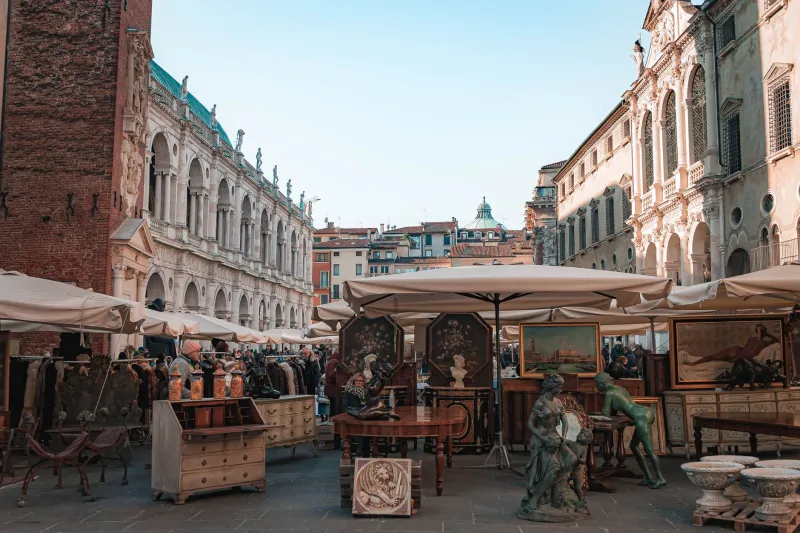
It was the kind of thing you pick up without thinking too hard about it. A yard sale on a Saturday morning in suburban Worcester, Massachusetts, the kind of estate sale where someone's entire life gets reduced to folding tables and handwritten price tags. Among the chipped ceramic figurines and outdated encyclopedias, there was a painting.
It was maybe two feet wide, framed in dark wood that had seen better decades. A landscape — rolling hills, a river catching late afternoon light, trees in the kind of amber-gold that makes you think of autumn even in July. No signature on the front. No label on the back. The price tag said five dollars.
Patricia Holt, a retired schoolteacher from Worcester, bought it because it matched her living room.
For seventeen years, it hung above her fireplace. Guests complimented it. Nobody thought much more about it than that.
The Conversation That Started Everything
In the summer of 2019, Holt's niece brought a friend to visit — a graduate student in art history finishing her dissertation at Boston University. The friend walked into the living room, stopped mid-sentence, and stared at the painting for a long moment.
"Where did you get that?" she asked.
Holt told her. Five dollars, estate sale, 2002, she couldn't even remember the address anymore.
The graduate student — who has since asked not to be identified by name in press coverage — took photographs on her phone and sent them to her faculty advisor that evening. The advisor forwarded them to a colleague. Within two weeks, Holt had received a phone call from a curator at a regional museum asking if they could examine the painting in person.
What followed was fourteen months of authentication work involving infrared reflectography, pigment analysis, and the painstaking cross-referencing of exhibition catalogs from the 1860s and 1870s.
The conclusion: the painting was almost certainly the work of George Inness, one of the most important figures of the Hudson River School movement, and it had been listed as missing — presumed destroyed in a warehouse fire — since 1891.
Why It Disappeared in the First Place
The Hudson River School was the first major American landscape painting movement, a loose collective of artists in the mid-to-late 1800s who treated the American wilderness as something close to sacred. Inness was one of its most prominent members, known for paintings that balanced precise observation with an almost spiritual quality of light.
This particular work — tentatively dated to around 1873 based on the pigment composition and stylistic markers — had been documented in the catalog of a private Boston collector. When that collector died, his estate was liquidated, and somewhere in the shuffle, the painting vanished. A fire at a storage facility in 1891 was assumed to have taken it, along with several other works. The insurance was paid out. The painting was written off.
But fires are imprecise historians. The painting, it appears, had been sold before the fire — possibly as part of an informal private sale that was never formally recorded. From there, the trail goes cold for over a century. At some point, the signature was either worn away or deliberately removed, possibly to make the painting easier to sell without the complications that come with provenance documentation.
It passed through unknown hands for more than a hundred years before ending up on a folding table in Worcester with a five-dollar sticker on the frame.
What Authentication Actually Looks Like
Movies tend to make art authentication look like a dramatic reveal — one expert, one moment, one gasp. The real process is considerably more tedious and involves a lot of people disagreeing with each other.
In Holt's case, the authentication process required comparison with documented Inness works from the same period, analysis of the canvas weave and ground preparation, and chemical testing of the pigments to confirm they were consistent with materials available in the 1870s. Crucially, conservators also found a partial stamp on the back of the canvas that matched a supplier used almost exclusively by New York and Boston artists during that specific decade.
No single piece of evidence was definitive on its own. Together, they built a case that the field's leading Inness scholars found compelling enough to formally attribute the work.
The painting was appraised at between $400,000 and $550,000.
The Part Nobody Quite Knows How to Process
Holt has said in interviews that she's still not entirely sure how she feels about any of it. The painting hung in her living room for seventeen years. She dusted the frame. She rearranged furniture around it. Her grandchildren grew up thinking of it as wallpaper.
The idea that any of those seventeen years could have gone differently — that she might have donated it to a thrift store, or sold it at her own yard sale, or simply thrown it out during a move — is the part of the story that tends to make people go quiet for a moment.
Somewhere between a Boston warehouse fire in 1891 and a folding table in Worcester in 2002, a lost American masterpiece spent more than a century hiding in plain sight. It took a graduate student with a good eye and a phone camera to finally bring it home.
The painting is currently on loan to a regional museum pending a final decision about sale. The five-dollar price tag, reportedly, has been preserved.