He Told Everyone Exactly How the Weather Would Kill Him. Then It Did.
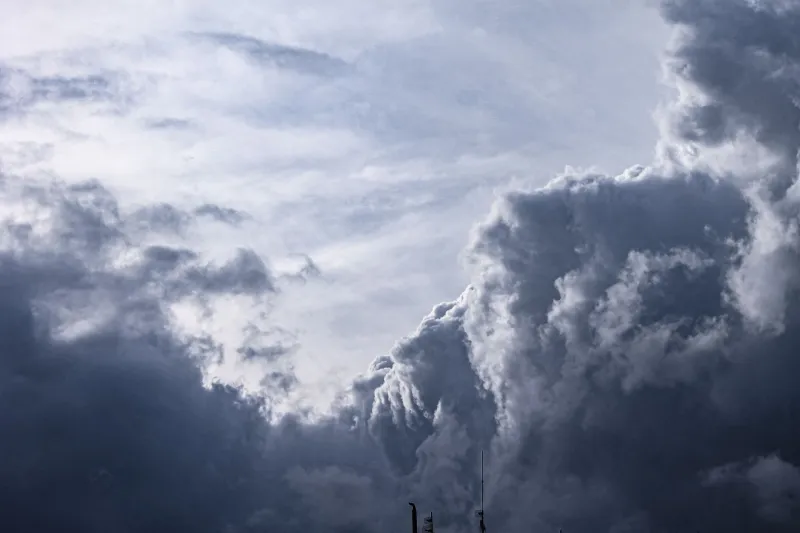
The Man Who Read the Sky for a Living — and Read His Own Future
Most people who spend their careers studying the weather develop a healthy respect for how unpredictable it can be. Andrew Taylor Voss developed something else entirely: a theory about how it would kill him.
Voss was a working meteorologist in the American Midwest during the early decades of the twentieth century — the kind of careful, methodical scientist who filled notebooks with barometric readings and spent his evenings cross-referencing pressure maps. He wasn't a showman. He wasn't prone to dramatic statements. Which is exactly what made it so strange when, sometime around 1912, he told colleagues at a regional meteorological conference that he had identified the precise atmospheric combination he believed would one day be responsible for his death.
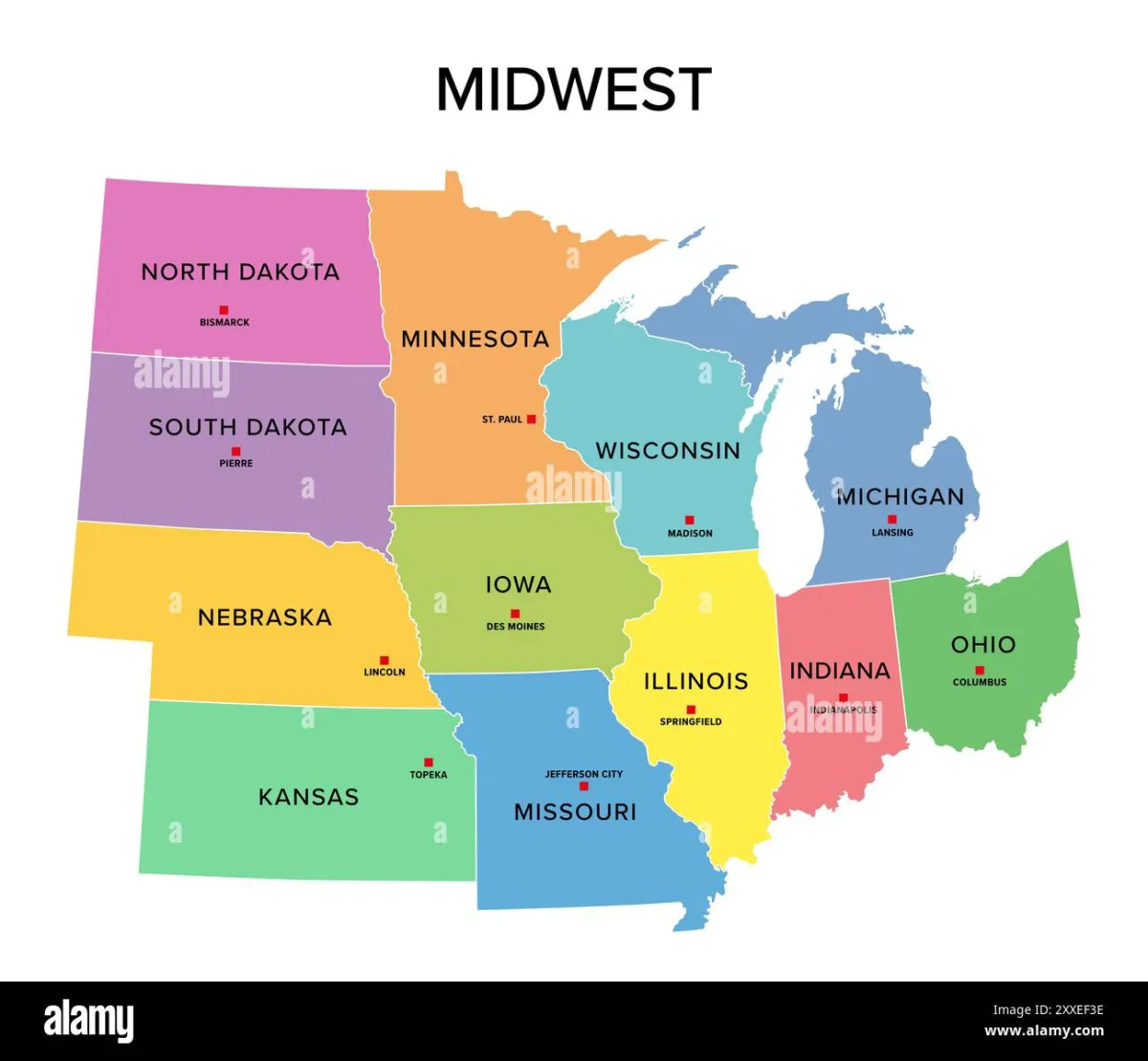 Photo: American Midwest, via c8.alamy.com
The conditions he described were oddly specific: a sharp pressure drop following a sustained period of unseasonable warmth, accompanied by a particular wind pattern that he associated with a type of storm system he had been tracking for years. He wasn't vague about it. He wrote the prediction down. Some accounts suggest he repeated it on more than one occasion, almost as a professional curiosity rather than a genuine warning.
His colleagues, by most accounts, treated it the way scientists usually treat that kind of statement — with polite skepticism and a quiet assumption that he'd eventually stop bringing it up.
He didn't stop. And eventually, he didn't have to.
What the Records Show
Voss died in the mid-1930s during a storm event in the central United States. What made the circumstances notable — and what turned a sad but ordinary death into something that meteorologists and statisticians have been quietly puzzling over ever since — was the weather log kept by his own station on the day he died.
The barometric readings showed exactly the pressure drop he had described. The temperature record confirmed the preceding warm spell. The wind data matched. Every atmospheric variable Voss had named in his prediction was present in the official record at the time of his death.
Now, here is where a responsible writer has to pause and do a little work.
The natural human instinct is to lean into the spooky angle and leave it there. But the more interesting question — the one that actual meteorologists have raised when this story comes up — is whether the prediction was as remarkable as it sounds, or whether Voss had simply identified a genuinely dangerous weather pattern and correctly assessed his own vulnerability to it.
Put differently: if you spend thirty years studying a specific type of storm, and you know from experience that it's the most dangerous thing your region produces, and you live in that region, and you're getting older — is predicting that this storm will eventually kill you really so extraordinary? Or is it just an unusually honest form of risk assessment?
The Statistics of Saying the Quiet Part Out Loud
Statisticians who have looked at cases like this tend to land in a frustrating middle ground. On one hand, the specificity of Voss's prediction is genuinely unusual. He didn't say "a bad storm will get me someday," which would be an easy prediction for anyone living in tornado country. He named variables. He described a pattern. That kind of specificity raises the bar considerably.
On the other hand, the human brain is extraordinarily good at finding matches after the fact. If Voss had described five atmospheric variables and three of them matched on the day he died, we'd probably still be telling this story — just with slightly less certainty. Confirmation bias doesn't care about meteorology.
What's harder to dismiss is the documentary record. Unlike a lot of "he predicted his own death" stories that rely on secondhand accounts and convenient memories, the Voss case has paper behind it. His written prediction exists. The weather logs from the day of his death exist. The match between the two is not a matter of interpretation — it's a matter of reading two documents and noticing they describe the same thing.
Why This Story Refuses to Go Away
There's a version of this story that's easy to tell as pure spookiness — the scientist who saw his fate written in the clouds and walked toward it anyway. That version is more satisfying as a narrative, but it misses the part that's actually strange.
The genuinely strange part is that Voss was almost certainly right for the wrong reasons. He probably wasn't psychic. He probably wasn't receiving some cosmic transmission about his personal destiny. What he most likely was doing was applying decades of pattern recognition to a very specific problem — his own mortality — and arriving at a conclusion that turned out to be accurate.
That's not supernatural. It might actually be more unsettling than supernatural. It suggests that if you understand a system well enough, you can predict outcomes that most people would consider unknowable. It suggests that expertise, taken far enough, starts to look a little like prophecy.
Or it suggests that sometimes reality just arranges itself into a shape that sounds like fiction, and the honest answer is that we don't entirely know why.
Voss would probably have appreciated the ambiguity. He was, by all accounts, a man who was comfortable sitting with uncertainty — which is, after all, the first requirement of anyone who spends their life trying to predict the weather.