He Paid Thirty Dollars for a Dusty Old Painting. It Turned Out to Be One of the Nazis' Victims.
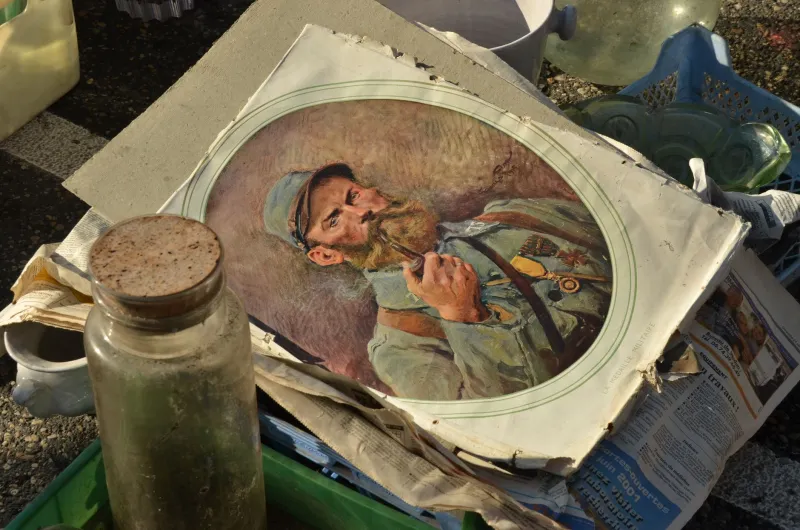
Most flea market stories end with a shrug and a dusty shelf. This one ended with an international investigation, a family learning something they hadn't known for three generations, and a painting finally going home.
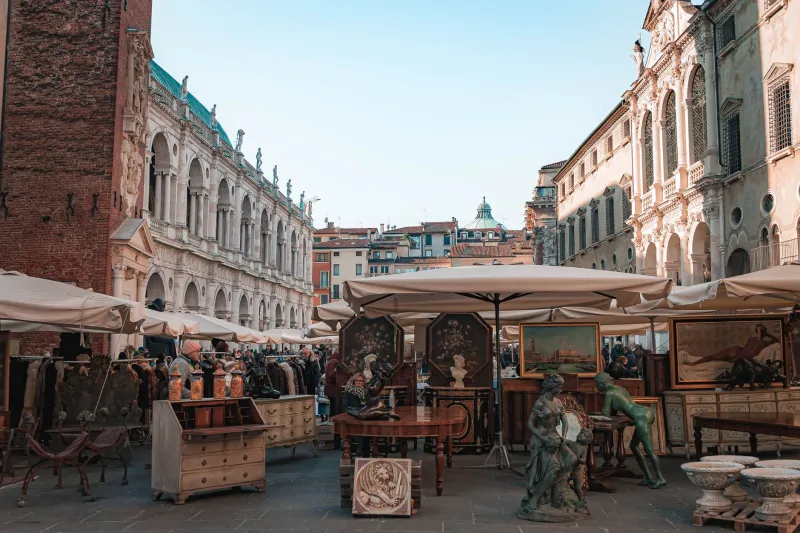
The buyer — a retired schoolteacher from rural Pennsylvania named Gerald Foss — wasn't looking for anything special on that Saturday morning in 2009. He was doing what people do at flea markets: wandering, squinting at things, occasionally picking something up and putting it back down. The painting caught his eye not for any artistic reason but because the gilded frame looked like it might clean up nicely. Thirty dollars. Done.
For the next five years, it hung in his hallway.
The Painting That Wouldn't Stay Anonymous
The work itself was modest — a small interior scene, oil on canvas, depicting a woman reading near a window. Nothing flashy. No obvious signature visible through the grime. Foss had it cleaned at a local framing shop in 2014, mostly because he was redecorating and wanted it to look presentable.
That's when the framer noticed something odd. Beneath the dirt on the back panel was a faint stamp — a partial gallery mark from Vienna, and a handwritten inventory number that didn't match any standard American system. The framer, who happened to have a side interest in European antiques, suggested Foss look into it.
Foss did what most people do when they want a quick answer: he Googled it. He found the Art Loss Register, a London-based database that tracks stolen and looted artwork worldwide. It contains over 700,000 records. He entered what details he had — the gallery mark, the partial number, the rough dimensions — and sent an inquiry.
The reply came back in four days. The painting was listed.
What the Database Knew
The Art Loss Register's record traced the work to a Jewish art collector in Vienna named Heinrich Brauer, whose collection was systematically seized by Nazi authorities in 1938, following the Anschluss — Germany's annexation of Austria. Brauer and his family fled to France. The artwork did not go with them.
Brauer's collection was dispersed in the way most looted art was: some pieces went to Nazi officials, some were sold through coerced auction houses, and others simply vanished into the secondary market, passed from dealer to dealer over decades until their origins became invisible. By the time a piece turned up in a Pennsylvania flea market bin, it had likely changed hands six or seven times, each transaction a little further from the original theft.
This particular painting had been documented in a pre-war photograph of the Brauer family's apartment — visible on the wall behind a group of relatives posed for what looked like a holiday gathering. That photograph survived because a descendant had submitted it to a Holocaust restitution archive in the 1990s, never expecting it to lead anywhere.
It led somewhere.
The Family That Didn't Know What Was Missing
Heinrich Brauer had been dead for decades by the time Foss's inquiry surfaced. But his granddaughter, a woman living in Chicago who had immigrated from France in the 1970s, was contacted by restitution researchers in 2014. She knew her grandfather had been a collector. She did not know the specifics of what had been taken.
When she was shown the photograph — her grandfather's apartment, the painting on the wall, her own grandmother standing just a few feet from it — she reportedly couldn't speak for a moment.
The legal process that followed took about eighteen months. Foss cooperated fully and without hesitation. He later told a local newspaper that once he understood what the painting was, keeping it never felt like an option. "It wasn't mine to begin with," he said. "It was just passing through."
The Bigger Problem Nobody Talks About
What makes this story unusual isn't just the happy ending — it's how close it came to not happening at all. If Foss hadn't had it cleaned, the gallery stamp might never have been noticed. If the framer hadn't had an interest in European antiques, the stamp might not have meant anything. If Brauer's granddaughter hadn't submitted that photograph to an archive twenty years earlier, there would have been nothing to match.
Every one of those things had to happen in sequence.
And here's the part that should make you uncomfortable: researchers estimate that somewhere between 100,000 and 650,000 artworks looted during World War II have never been recovered. They're hanging on walls in living rooms, sitting in storage units, propped behind other canvases in antique shops. Most of them will never be traced because the paper trail is gone, the families are gone, or the works themselves are too obscure to appear in any database.
The Art Loss Register currently has active claims on over 700,000 objects. Most will never be resolved.
Foss's painting — a quiet little interior scene of a woman reading by a window — made it back because of a frame he liked, a framer who paid attention, and a granddaughter who had the foresight to submit a photograph to an archive on the off chance it might someday matter.
It mattered.
The painting now hangs in Chicago. The frame, Foss kept.