The Men Nobody Was Listening To Noticed Something That Could Have Ended Very Badly
The Last People Anyone Expected to Save the Day
There is a version of this story where it ends very differently. Where the corrosion goes unnoticed, the flaw goes unaddressed, and somewhere down the line, a reactor component fails in a way that engineers had not accounted for. That version of the story didn't happen. And the reason it didn't happen is genuinely strange.
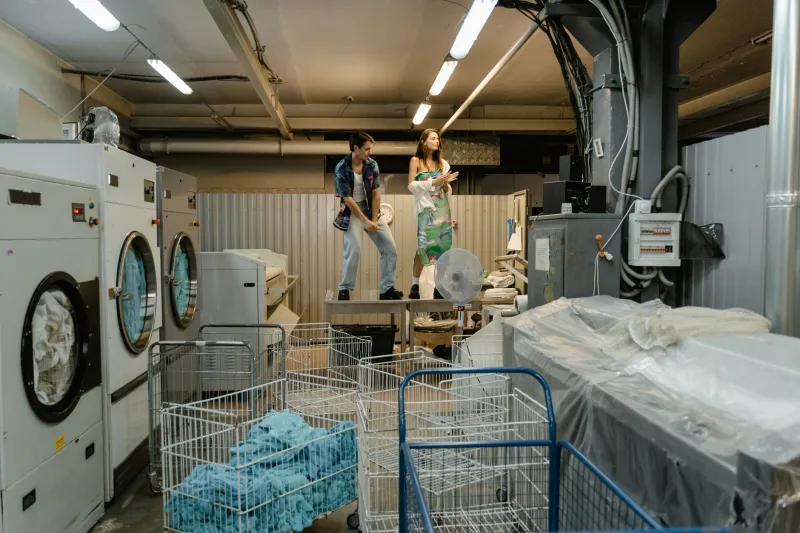
In the mid-1970s, a group of incarcerated men at a federal correctional facility were processing equipment through an industrial laundry operation — standard practice at the time, where prison labor was used to clean and decontaminate components from nearby federal facilities. The work was repetitive. The men doing it were not engineers, not scientists, not anyone whose observations were likely to be taken seriously by the people running the facilities whose equipment they were cleaning.
But they noticed something. And eventually, reluctantly, the right people listened.
How the Laundry System Worked
By the early 1970s, several federal facilities — including sites connected to nuclear energy research and early commercial reactor programs — had established relationships with nearby correctional institutions for industrial cleaning work. The arrangement was economic. Prison labor was cheap, the facilities needed regular decontamination services, and the work was considered low-risk enough to be handled outside the primary facility.
Workers at these laundry operations processed metal fittings, valve components, and various hardware items that cycled through regular cleaning and inspection. Most of it was routine. Most of it looked exactly the same going in as it did coming out.
But in one facility — the specific location has been obscured in most historical accounts, with some sources pointing to a site in the mid-Atlantic region — workers began noticing a pattern. Certain components were coming back for cleaning more frequently than others. And when they did, they showed pitting and discoloration that didn't look like normal wear. It looked like something was eating at the metal in a specific, consistent way.
The men brought it up to the staff supervisor. The supervisor noted it. For a while, nothing happened.
The Problem With Being the Person Nobody Expects to Be Right
This is where the story becomes uncomfortable in ways that go beyond the technical details.
The workers who flagged the corrosion issue were incarcerated individuals in a system that was not structurally designed to take their observations seriously. The feedback loop between a prison laundry floor and a federal engineering review board was not a short one. It required someone at each level of that chain to decide that the observation was worth passing upward — and at each level, there was a reasonable institutional incentive to simply not bother.
It is a credit to at least one mid-level federal employee — whose name appears in some internal documents from the period but has not been widely publicized — that the concern was eventually escalated to engineers conducting a broader review of reactor component materials.
When those engineers looked at the specific components the workers had flagged, they found something that matched a theoretical concern that had been circulating in materials science literature: a form of stress corrosion that could, under certain conditions, compromise the structural integrity of components used in reactor coolant systems. The corrosion pattern the workers had identified wasn't random. It was consistent with a specific failure mode that the components were not supposed to be susceptible to under their rated operating conditions.
The rated operating conditions, it turned out, had been slightly miscalculated.
What the Investigation Found
The formal investigation that followed — conducted across multiple federal agencies in the mid-to-late 1970s — concluded that the corrosion issue represented a legitimate safety concern that warranted design modifications and enhanced inspection protocols for a category of reactor components then in use at several facilities.
The scope of the potential problem was significant enough that the findings contributed to a broader reassessment of materials standards in the nuclear industry during this period. This was not a minor procedural update. Engineers who reviewed the findings described the failure mode as one that could have led to coolant system compromise under high-stress operating conditions — the kind of scenario that reactor safety systems are specifically designed to prevent, but that becomes considerably more complicated when the components themselves are the problem.
The workers who first flagged the corrosion were interviewed as part of the investigation. Their testimony was included in the formal record. Several engineers involved in the review later acknowledged that without the early observation from the laundry facility, the corrosion pattern might not have been identified until a component actually failed in service.
The Part That Stays With You
Nuclear safety history is full of near-misses — moments where a disaster was averted by a margin that only becomes visible in retrospect. Most of those moments involve engineers, regulators, or trained technicians making a critical observation at a critical time.
This one involves a group of men doing laundry in a federal prison, noticing something that didn't look right, and deciding it was worth mentioning even though nothing in their situation suggested anyone would care.
The corrosion issue was fixed. The components were redesigned. The facilities continued operating. History moved on without the version of events that might have unfolded otherwise.
The men who started that chain of events received no formal recognition. Their names do not appear in the public-facing accounts of the safety review. They are, in the historical record, essentially anonymous.
But the outcome — the one where things went fine — has their fingerprints on it.