He Drew the Map to Get Out. Someone Else Used It to Get Rich.
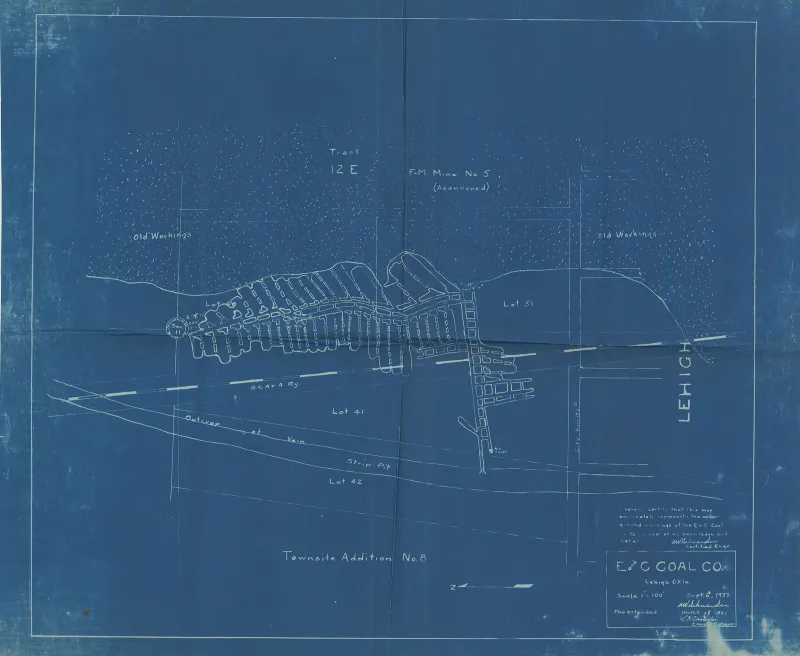
Photo: old hand-drawn tunnel map underground mine 1920s historical, via oklahoma.gov
There's a particular kind of irony that only history can produce: the kind where a man running for his life accidentally hands someone else a fortune.
In the early 1920s, prison labor was common in the American West. Inmates worked mines, cleared land, and built roads — often in conditions that made escape seem worth the risk. One such prisoner, serving time at a labor facility in the mountain West, decided he'd had enough. And when he made his move, he did something unusual: he drew a map.
The Man Who Couldn't Afford to Get Lost
The tunnels beneath the prison mine were a maze. They had been dug over years, expanded without much planning, and connected in ways that even the guards didn't fully understand. For a man trying to escape through them in near-darkness, getting turned around wasn't just inconvenient — it was fatal.
So the prisoner did what careful people do: he documented his route as he went. Using whatever he had on hand — accounts vary between a charcoal stub and the blunt end of a mining tool — he sketched the tunnel system on a folded piece of paper as he moved through it. He marked junctions, noted where ceilings dropped, and indicated which passages were dead ends. It wasn't art. It was survival.
He made it out. The map went with him.
For a few years, the document apparently changed hands in the way that things do among people living outside the law — passed along, traded, tucked into a coat pocket and forgotten. At some point in the late 1920s, it ended up in the possession of a small-time land speculator in Colorado who had no idea what he actually had.
The Geologist Who Asked the Right Question
The speculator, trying to assess whether a particular stretch of land was worth buying, hired a geologist to look it over. The geologist — whose name does appear in the historical record, though it's been rendered inconsistently across sources — wasn't finding much of interest on the surface. Then the speculator, almost as an afterthought, showed him the map.
The geologist recognized something immediately. The tunnel layout the escaped prisoner had drawn didn't match any known mining operation in the region. The angles were wrong. The depth markers — rough as they were — suggested the tunnels went far deeper than standard prison mine operations typically ran. And one particular section of the map, where the prisoner had noted "walls go strange here, almost purple," caught the geologist's attention in a way that probably made his hands shake a little.
Purple-hued rock in that geological zone meant one thing: a particular mineral-rich ore deposit associated with copper and, in some formations, silver.
The geologist quietly advised the speculator to buy the land. Then he went back to look more carefully.
What Was Down There
What followed was one of the more significant mineral finds of that decade in the region. The deposit was substantial — estimates at the time placed its value in the millions, a figure that meant something very different in 1929 dollars than it does today. The geological survey that eventually mapped the site formally credited the discovery to the speculator and the geologist. The escaped convict who had first documented the underground system that made the whole thing possible was not mentioned.
He couldn't be, really. Acknowledging his contribution would have meant explaining how the map came to exist — and that explanation started with a prison break.
The Original Mapmaker
Historians piecing together this story in later decades faced an obvious problem: the prisoner's identity is murky. Records from prison labor facilities of that era were inconsistently kept, and men who escaped had every reason to disappear completely. A few researchers believe they've identified him through cross-referencing escape records with land transaction documents from the period, but nothing has been confirmed with certainty.
What seems clear is that he lived out his life without any connection to the fortune his map helped create. Whether he ever knew what had come of his escape route is unknown. Almost certainly, he didn't.
Why This Story Still Matters
It would be easy to frame this as a simple injustice — and there's definitely an injustice in it. A man in a desperate situation created something of extraordinary value and received nothing for it. That's worth sitting with.
But the story is also a strange reminder of how knowledge moves through the world. The prisoner wasn't trying to contribute to geology. He was trying to not die in a tunnel. The map he made was purely personal, purely practical, and entirely accidental as a historical document.
And yet it ended up reshaping the economic history of a patch of land, enriching people who had nothing to do with its creation, and eventually finding its way into the kind of footnotes that historians argue about in academic journals.
The mine was eventually exhausted and closed. The land changed hands again. The original map, if it still exists somewhere, has never been publicly located.
Somewhere in an archive or an estate sale box or a forgotten drawer, there may still be a piece of paper with charcoal smudges showing the exact route one man took to escape his circumstances — and accidentally document a fortune he'd never touch.